What Happens If You Skip Paint Correction Before Ceramic Coating or PPF?
You've done the research. You know ceramic coating or paint protection film (PPF) is the right investment for your vehicle. You're ready to book. Then someone mentions paint correction, and you wonder: is that really necessary, or is it just an upsell?
It's a fair question, and one that detail-oriented, value-conscious owners ask all the time. At Elbow Grease Detailing in Tinton Falls, NJ, we hear it often, especially from drivers who have invested in a quality vehicle and want to protect it the right way. The honest answer is this: skipping paint correction before ceramic coating or PPF is one of the most common and most irreversible mistakes a vehicle owner can make. This post explains exactly why, so you can make a fully informed decision before committing to a long-term protection service.
What Paint Correction Actually Does
Before getting into the consequences of skipping it, it helps to understand what paint correction accomplishes in the first place.
Your vehicle's paint is protected by a clear coat, a transparent top layer that sits above the color and shields it from environmental damage. Over time, that clear coat accumulates defects: swirl marks from improper washing, light scratches from road debris, water spot etching from mineral deposits, and surface oxidation from UV exposure.
These defects are not dirt. They are physical imperfections within the clear coat itself. Standard washing, claying, or wiping will not remove them.
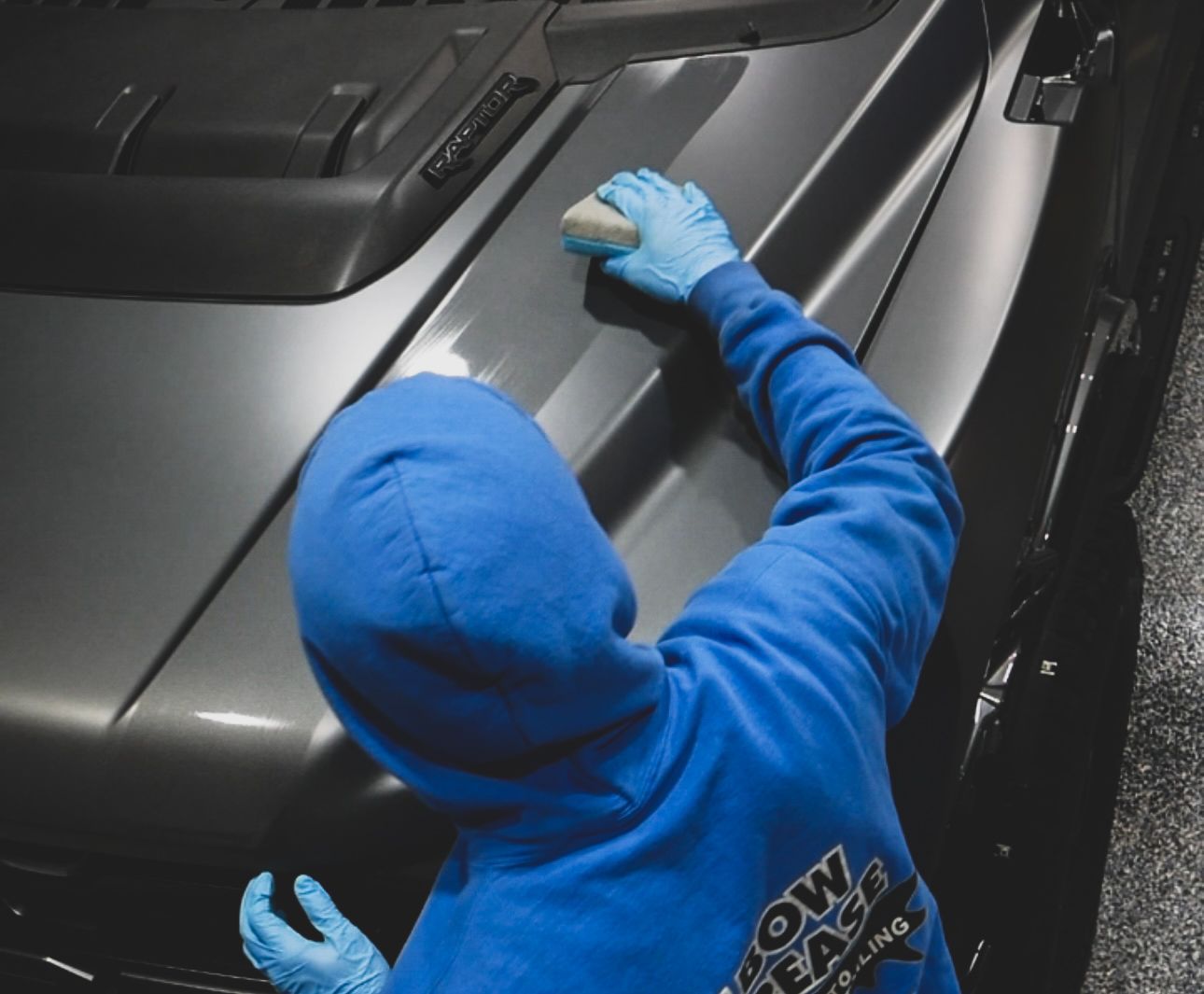
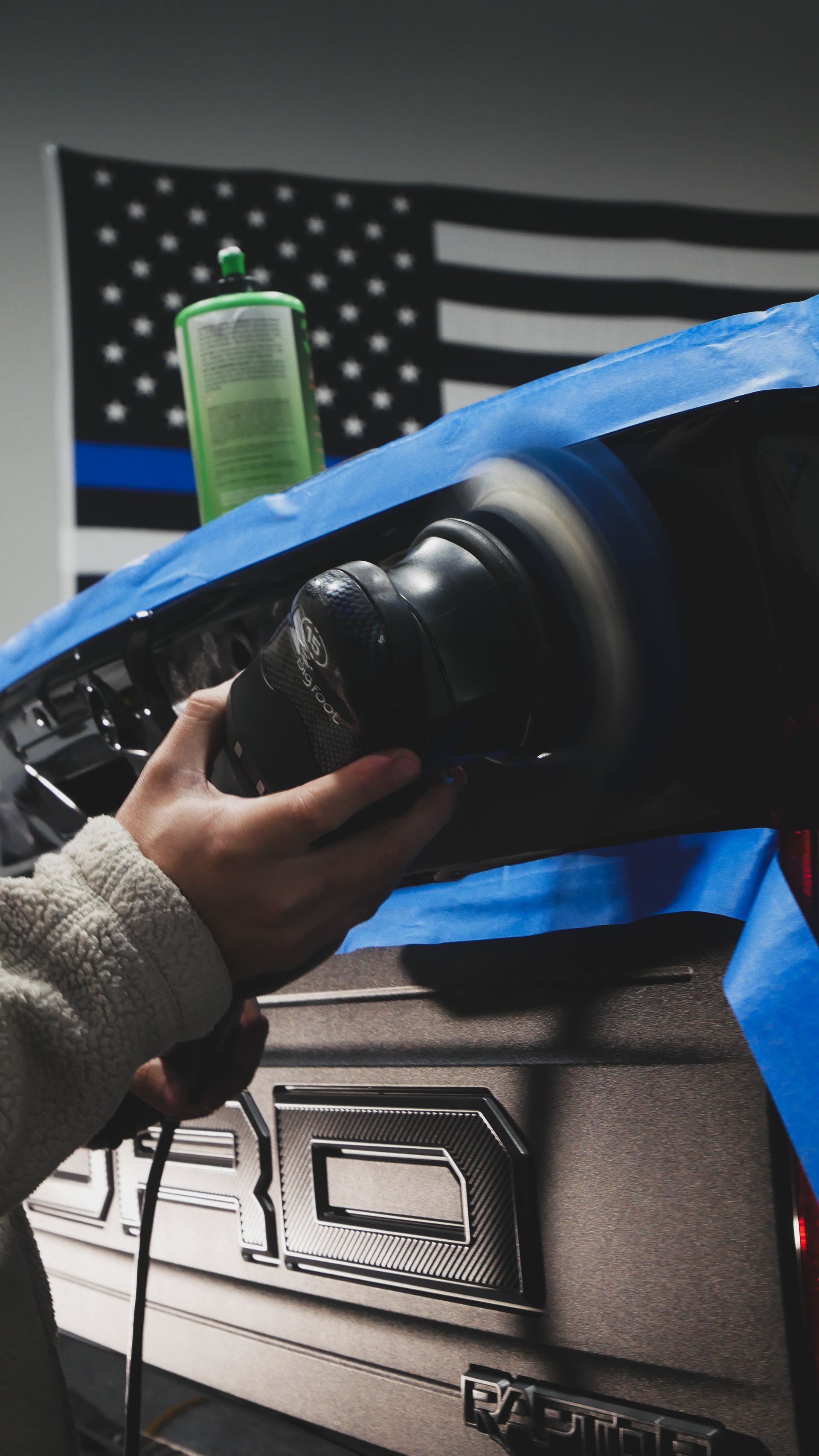
At Elbow Grease Detailing, paint correction uses professional-grade machine polishing to carefully level and restore the clear coat. The two-step paint correction process involves a compounding stage to address deeper imperfections, followed by a polishing stage to refine the surface and bring out maximum gloss and clarity. The result is a smooth, defect-free foundation that is properly prepared to receive a coating or film.
Why the Surface Condition Matters Before Coating or PPF
Ceramic coating and PPF are both designed to bond to and protect the surface beneath them. Neither product has any ability to correct what already exists on the paint. They preserve the current condition of your paint permanently.
This is the core issue that most customers do not fully realize until it is explained to them. A coating or film does not smooth over defects. It bonds around them, locking them in place at the molecular level. Once cured or installed, there is no adjustment, no buffing through the product, and no straightforward way to address what is underneath without starting over entirely.
For an owner who has invested in a quality vehicle and is making a deliberate, research-driven decision to protect it long-term, this distinction matters enormously. The protection is only as good as what it is bonded to.
What Sealed-In Defects Look Like and Why It Is Irreversible
Here is what actually happens when swirl marks, marring, or light scratches are present on the paint at the time of ceramic coating or PPF installation.
Under Ceramic Coating
Ceramic coating creates a hard, glass-like layer that bonds directly to the clear coat. When it cures over swirl marks or surface scratches, those imperfections become locked beneath the coating. The high gloss that ceramic coating produces actually amplifies how visible those defects are, and the reflectivity of a well-coated surface draws the eye directly to any irregularities trapped beneath it.
What looks like a subtle swirl mark before coating will appear noticeably more visible once the coating is applied and cured. In direct sunlight or under artificial lighting, the contrast becomes significant. The longer-lasting the coating, the longer those defects remain visible and magnified.
To address them at that point, the coating must be fully removed, which requires aggressive polishing that defeats the purpose of having applied it in the first place.
Under Paint Protection Film
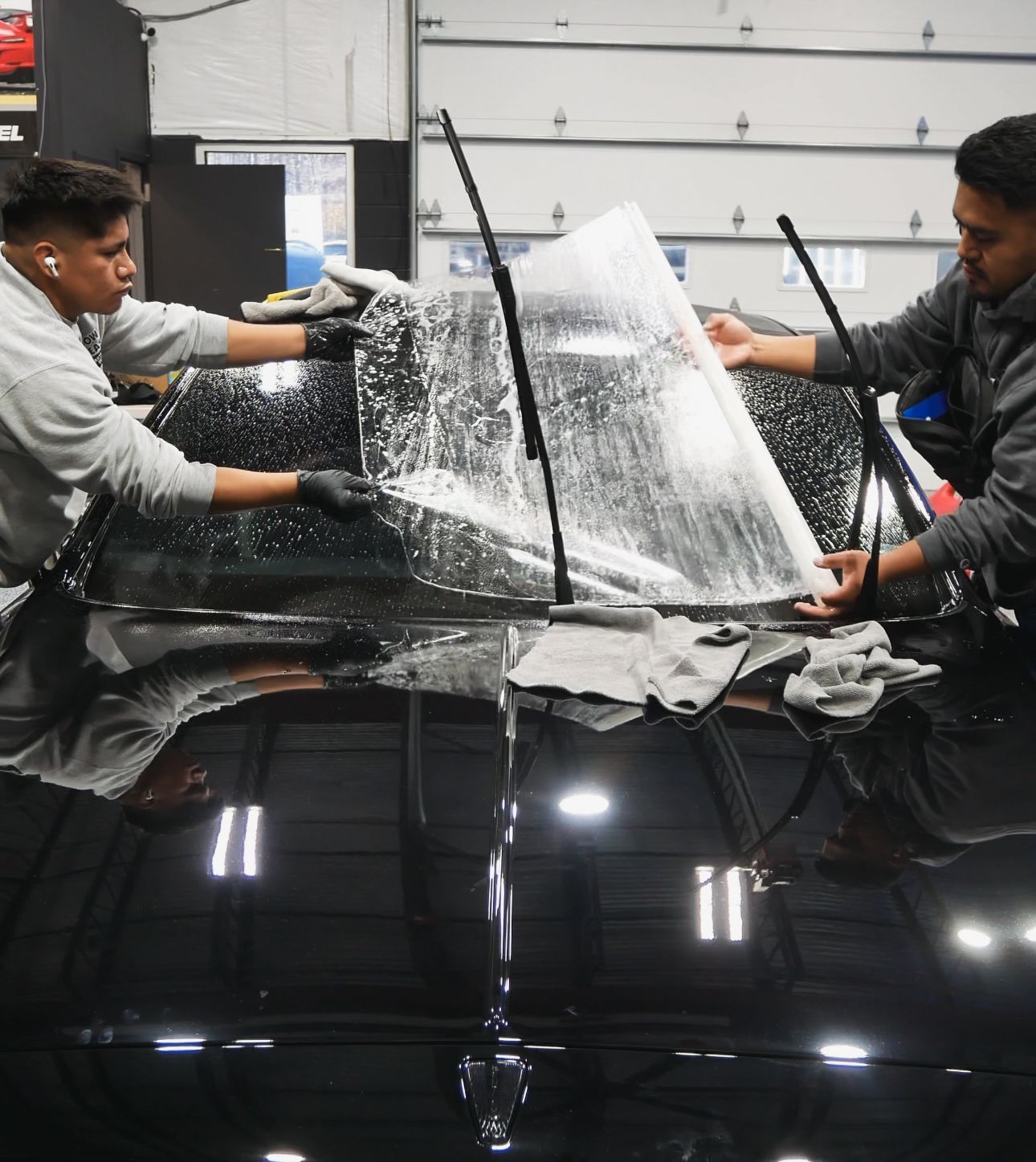
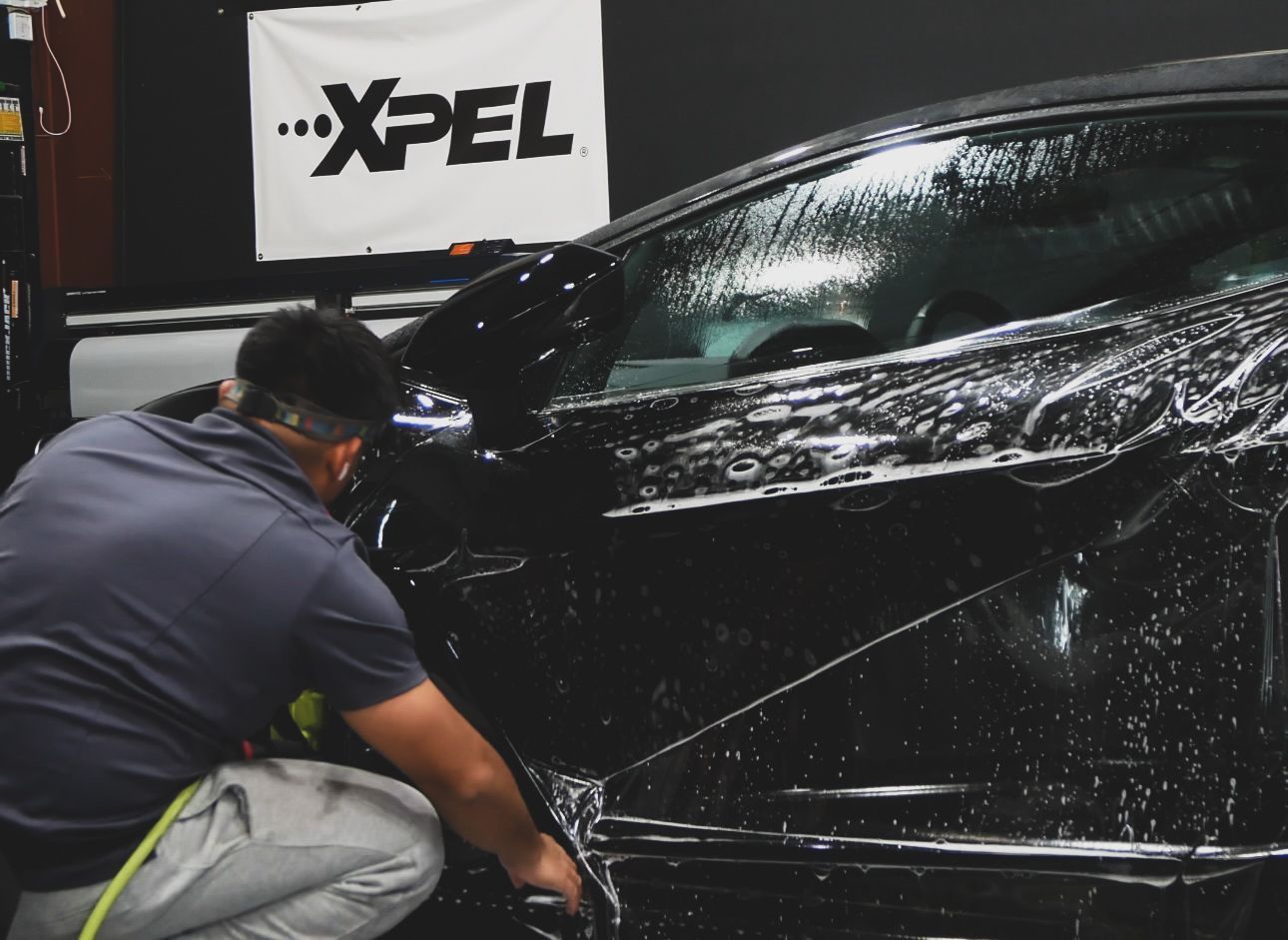
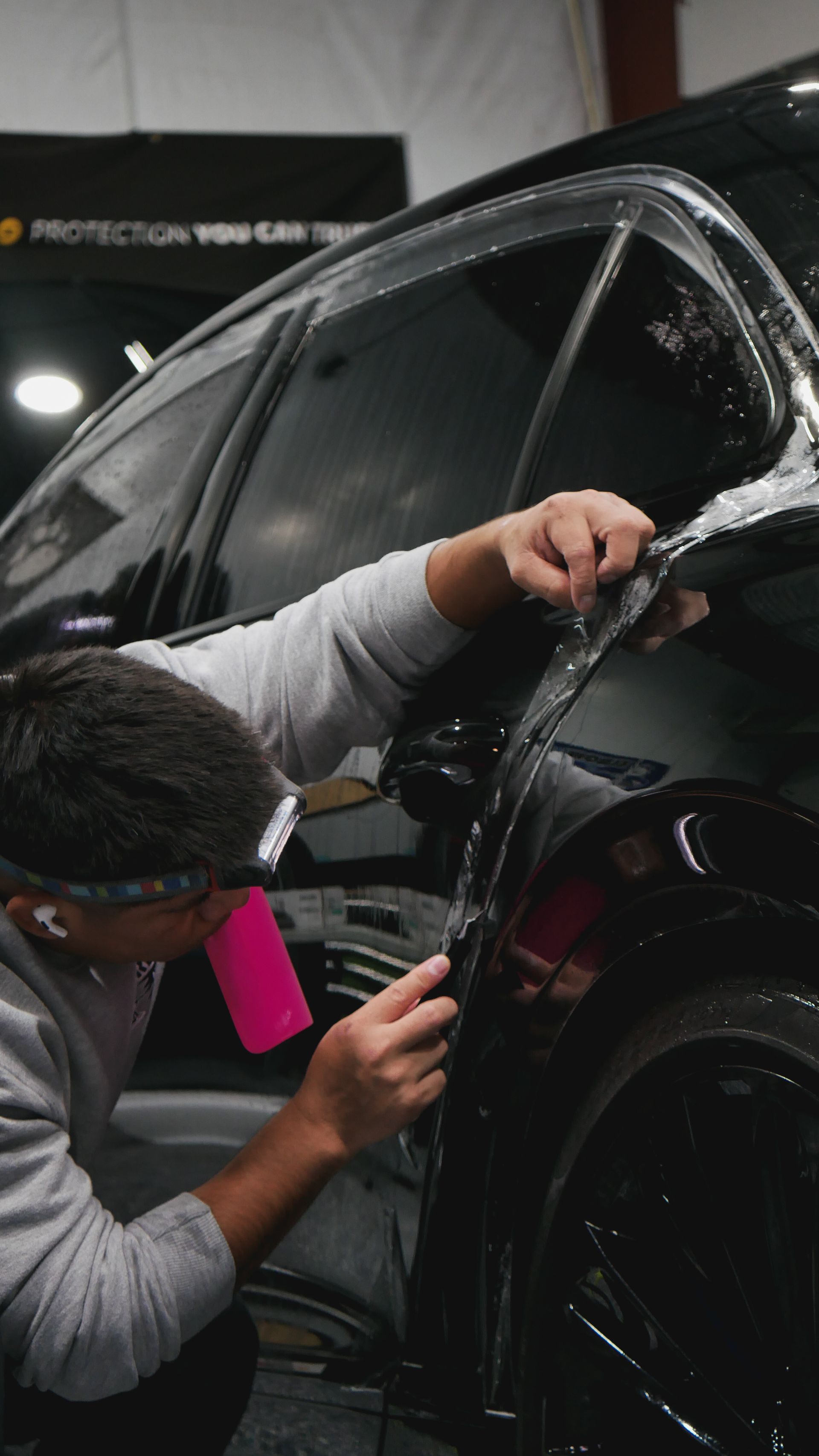
PPF creates an even more pronounced effect. The film is optically clear and adheres tightly to the paint surface, which means it conforms to every contour of the clear coat, including every scratch, swirl, and etch mark present at installation.
Looking at a vehicle through a well-installed film is similar to looking at the paint through a magnifying lens. Any texture or irregularity in the surface beneath it becomes more defined, not less. Light scratches that might go unnoticed on bare paint can become clearly visible lines under film.
Unlike ceramic coating, PPF cannot simply be polished off if the result is unsatisfactory. Removal requires careful heat application and time, and depending on how long the film has been in place and the condition of the clear coat beneath it, removal carries its own risks.
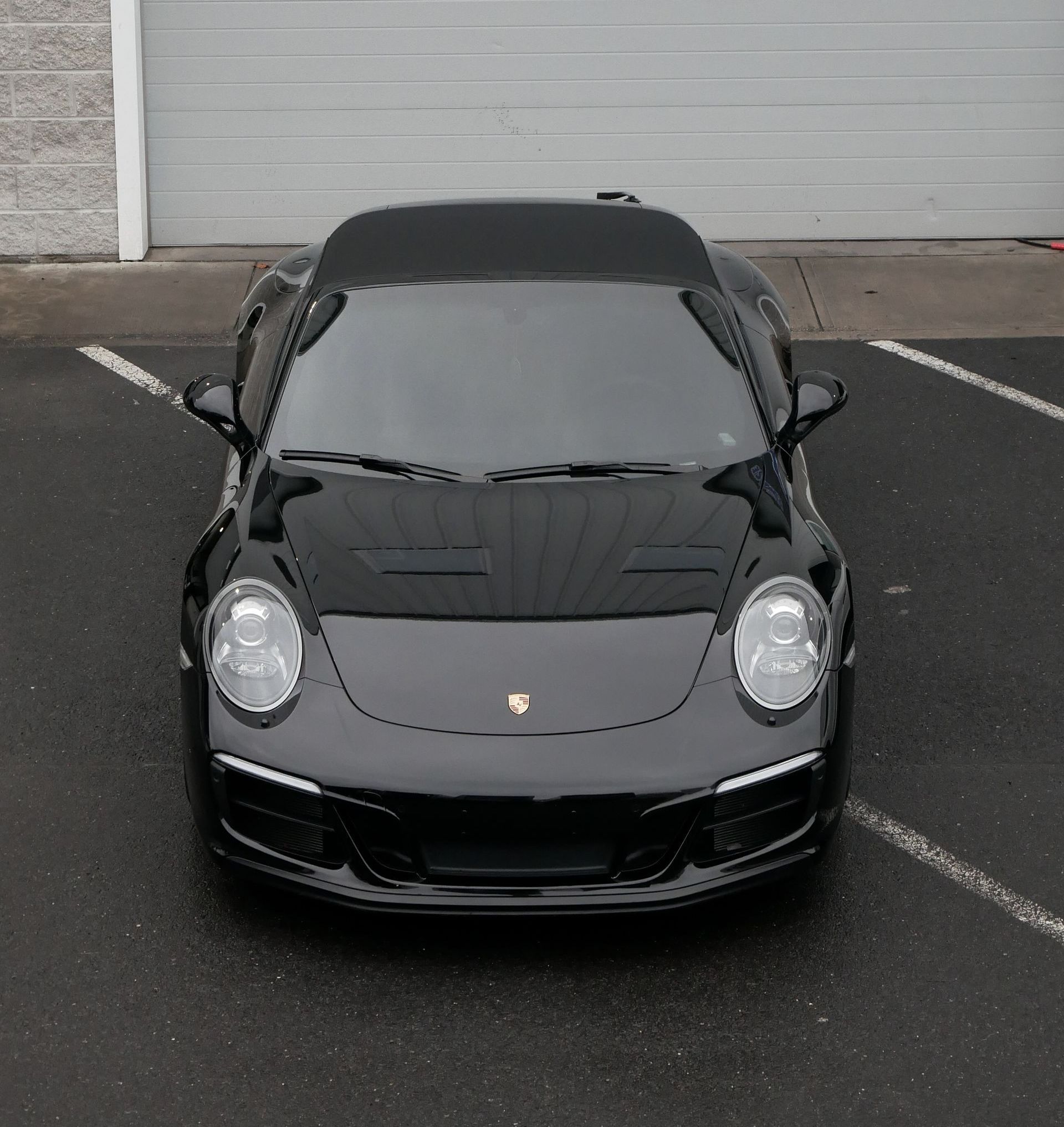
The Defects That Are Most Commonly Overlooked
Many vehicle owners assume their paint is in reasonably good condition simply because the car has been washed regularly. In practice, a large number of daily-driven vehicles, including newer ones, carry clear coat imperfections that are invisible under casual inspection but become visible under proper lighting or once protection is applied.
This is especially true for vehicles that have passed through automated car washes, received a dealership detail at delivery, or simply accumulated normal road use over a few seasons. Owners who are particular about their vehicle's appearance and who have invested in a car that reflects their standards are often surprised by what a professional paint inspection reveals.
The most common defects encountered at Elbow Grease Detailing before coating or film services include:
- Swirl Marks: Fine circular scratches left by automatic car washes, improper hand-washing technique, or abrasive towels. Often only visible in direct sunlight or under a focused light source, but highly visible on coated finishes.
- Light Random Scratches and Marring: Shallow marks from branches, tight parking spaces, jacket zippers, or incidental surface contact. These are easily missed in low lighting but stand out clearly on reflective-coated paint.
- Water Spot Etching: Mineral deposits from hard water, rain, or sprinkler contact that have bonded with or etched into the clear coat. A standard wash will not remove these; specialized correction techniques are required.
- Buffer Trails: Circular holograms left behind by improper machine polishing, sometimes introduced during a dealership detail or by a prior shop using incorrect pads or compounds.
- Surface Oxidation: A hazy or milky appearance in the clear coat caused by prolonged UV exposure, particularly common on older vehicles or those stored outdoors for extended periods.
Every one of these defects is addressable through professional paint correction before it is sealed in. None of them is addressable after a coating is applied or film is installed, not without full removal of the protection first.
Why Elbow Grease Detailing Treats Paint Correction as a Prerequisite
At Elbow Grease Detailing, every vehicle receives a thorough inspection before any coating or film work begins. This is not an optional step. It is part of how quality protection work is done correctly.
When a vehicle is booked for a 4-year or 8-year ceramic coating, each of those packages already includes a Level 1 paint correction as part of the preparation process. This ensures the surface is properly refined before the coating is applied, so the finished result reflects genuine craftsmanship rather than a glossy surface concealing unaddressed damage.
For vehicles with more significant defects, such as deeper scratches, heavy water spotting, or paint that has not been properly maintained, a dedicated paint correction appointment is recommended before any protection service. The paint correction options at Elbow Grease Detailing, which include water spot removal and two-step paint correction, are specifically designed to address these situations, restoring the clear coat to a near-original state so that whatever protection follows performs as intended and looks flawless throughout its full lifespan.
Skipping this step to reduce upfront cost means paying for a premium protection product applied to a compromised surface. The protection itself may still function, as the hydrophobic properties of ceramic coating will still repel water and contaminants, but the aesthetic result will be permanently diminished. For an owner who takes pride in how their vehicle looks and holds its value, that is not an acceptable outcome.
The Right Order of Operations
For anyone planning a ceramic coating or PPF installation in Tinton Falls or the surrounding Monmouth County area, the correct sequence is straightforward:
- Thorough Decontamination Wash: Removes surface contamination, bonded particles, and road grime that cannot be cleared by a standard wash alone.
- Paint Inspection Under Proper Lighting: Identifies the type and severity of clear coat defects present, determining the level of correction required.
- Paint Correction: Water spot removal, or a full two-step compounding and polishing process, depending on the vehicle's condition.
- Final Surface Preparation: Panel wipe-down and IPA treatment to strip any remaining oils or polish residue before the coating or film is applied.
- Ceramic Coating or PPF Installation: Applied to a clean, corrected, defect-free surface for a result that is both visually flawless and durably protected.
This is the process followed at Elbow Grease Detailing on every vehicle, every time. It is what separates a protection job that performs and looks right for years from one that falls short from the moment it is complete. For a vehicle owner who has done their research and knows what quality looks like, this process is not a luxury. It is the standard.
Schedule Your Paint Correction in Tinton Falls
If you are planning a ceramic coating or PPF installation and want to know what condition your paint is actually in, the first step is an honest evaluation. At Elbow Grease Detailing, located at 4043 NJ-33 in Tinton Falls, NJ, the team will inspect your vehicle and walk you through exactly what correction, if any, is needed before protection is applied. No pressure, no guesswork.
Learn more about paint correction at Elbow Grease Detailing
To
schedule a consultation or request a quote, call (732) 403-7449, or use the contact form at elbowgreasenj.com. Shop hours are Monday through Friday, 9:00 AM to 5:00 PM, and Saturday by appointment from 9:00 AM to 1:00 PM.